
In World of Warcraft raids, understanding boss mechanics involves identifying raid-wide damage, tank busters, and DoT effects, all requiring healing and mitigation. You’ll also manage adds and hazardous environments, coordinating player movement and positioning effectively. Special boss phases, random mechanics, and interrupt rotations challenge strategy development, while enrage timers demand optimized DPS. Integrating these elements is essential for mastering encounters; unraveling these layers promises deeper insights into raid complexities.
Key Takeaways
- Raid-wide damage mechanics require coordinated healing to ensure player survival during intense encounters.
- Effective movement coordination is essential to dodge telegraphed attacks and to maintain optimal positioning.
- Managing adds with crowd control is crucial to prevent them from overwhelming the raid group.
- Understanding special ability interactions can significantly impact the success of handling unique boss phases.
- Enrage timers demand strict DPS optimization to avoid instant raid wipes, emphasizing the need for efficient rotations.
Common Raid Boss Mechanics
In World of Warcraft, understanding common raid boss mechanics is essential for success in challenging encounters. You’ll often face raid-wide damage that demands heavy healing to keep everyone alive. Tank busters are another threat, requiring you to use defensive cooldowns effectively. Damage over time (DoT) effects need timely dispels or cleansing to mitigate ongoing harm. Be aware of damage amplification debuffs, which increase incoming damage, making it vital to minimize their impact on your team. When engaging with twin bosses, their linked health pools necessitate synchronized strategies to prevent catastrophic outcomes. Shared damage mechanics are a frequent challenge, where damage must be split among multiple players to prevent anyone from taking a lethal hit. Proper coordination and communication are key to managing these mechanics efficiently. Additionally, you must stay vigilant for add management, as additional enemies can spawn during boss encounters. Prioritize these adds quickly, as they often have special abilities or mechanics that can drastically alter the fight’s outcome if left unchecked.
Movement-Based Mechanics
Although understanding movement-based mechanics is vital in World of Warcraft, mastering them requires practice and coordination. Effective movement coordination is key, as players must adeptly position themselves to avoid damage and optimize performance. During encounters, you’ll need to spread out to prevent chain damage or stack together to absorb shared hits. Identifying and moving to safe zones during area-wide attacks will minimize harm, while rotating positions helps manage debuff distribution.
In addition, dodging plays a significant role. Sidestepping telegraphed attacks, outranging circular AoEs, and weaving through moving hazards are essential skills. Jumping over ground effects and using line-of-sight techniques help avoid certain mechanics. Unique mechanics stand out in raid encounters, often leading to controversy among the player community due to their difficulty.
Environmental interaction further challenges player positioning. You’ll utilize grappling hooks or jump pads for vertical movement and navigate shifting platforms. Handling forced movement, like managing knockbacks or coordinating during chase sequences, guarantees you maintain control and adapt to dynamic environments.
Add Management
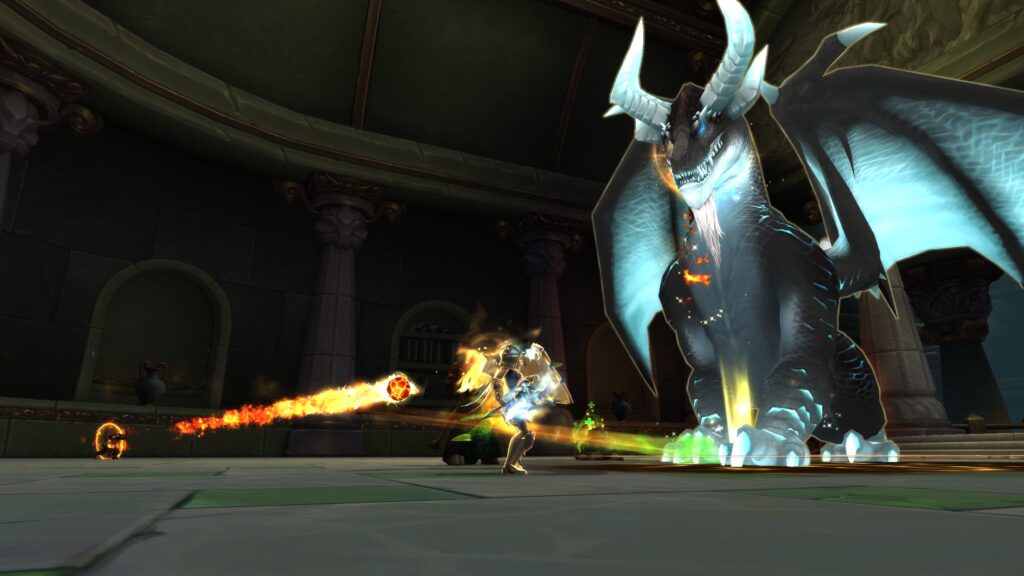
In WoW raid encounters, prioritizing high-impact adds is vital to prevent overwhelming the raid, as these can include healing adds that restore the boss’s health or explosive adds causing significant AoE damage. Effective crowd control strategies, such as interrupting critical spellcasts or using crowd control abilities, can limit add effectiveness and provide your team with the breathing room needed to focus on the boss while managing additional threats. By assigning specific players to handle these tasks and rotating interrupts, you can guarantee a smooth and coordinated approach to add management, balancing the need to control adds with maintaining pressure on the boss.
Prioritizing High-Impact Adds
When managing high-impact adds in World of Warcraft raids, understanding which enemy targets to prioritize is essential for success. Begin with add prioritization by analyzing boss mechanics to identify which adds pose the greatest threat. Use tools like boss mods or WeakAuras to track spawn timers, ensuring you’re ready to engage these targets promptly. Assign raid members to call out priority targets, maintaining a clear kill order based on add abilities and raid composition.
- Analyze boss mechanics to determine high-threat adds.
- Monitor raid frames for debuffs indicating dangerous adds.
- Use boss mods to track spawn timers of priority adds.
- Assign specific raid members to call out priority targets.
Effective Crowd Control Strategies
To effectively manage adds in World of Warcraft raids, mastering crowd control (CC) strategies is vital for maintaining order and guaranteeing raid success. Assign specific CC roles to each raid member and use raid markers to designate CC targets. Timing is essential; rotate CC abilities for maximum uptime, and synchronize CC with boss ability timers. Positioning is key, too—place ranged DPS strategically and tanks to facilitate CC application, creating CC zones to funnel adds. Adaptation is necessary; adjust CC assignments based on raid composition and fight progression. Communicate clearly about CC breaks and re-applications to guarantee smooth execution. Prioritize CC on dangerous adds, and sequence CC applications to extend control duration, maximizing your raid’s effectiveness.
Environmental Hazards
In the chaotic world of WoW raids, environmental hazards play a vital role by introducing hazardous floor mechanics, which can turn the tide of battle if not managed properly. These include weather impacts that can alter abilities, such as freezing winds slowing your movement or gravity shifts that change how your character interacts with the environment, requiring quick adaptation. You’ll need to remain vigilant and coordinate with your team to navigate these challenges effectively, ensuring that your strategy accounts for these dynamic elements.
Hazardous Floor Mechanics
Although hazardous floor mechanics may seem intimidating, they play an important role in shaping raid encounters by introducing environmental threats that demand quick reflexes and strategic thinking. You need to master hazard identification strategies to spot fire patches, poison zones, and other dangers quickly. Effective hazard mitigation techniques are essential for survival, ensuring you avoid damage and maintain high performance.
- Watch for visual cues like color changes signaling hazardous areas.
- Listen for audio warnings to anticipate incoming threats.
- Use addons that highlight dangerous zones on the floor.
- Communicate hazard locations swiftly to your team.
Positioning becomes important as you navigate these threats, impacting tank placement and healer strategies. By staying vigilant and prepared, you can mitigate the dangers of hazardous floor mechanics effectively.
Weather Impact on Abilities
Maneuvering hazardous floor mechanics requires a keen awareness of your surroundings, and the weather impact on abilities adds another layer of complexity to raid encounters. Weather-based abilities, such as fire zones and freezing winds, demand quick reactions and strategic thinking. Fire elementals spawn from increasing temperatures, forcing you to manage heat debuffs and avoid flame walls that restrict movement. In cold environments, ice patches can cause slips, while frost debuffs limit healing capacity. Lightning strikes and conductive puddles require positioning precision to avoid chain damage, while wind gusts disrupt player locations. Toxic clouds and poisonous plants necessitate careful navigation, as venomous adds apply stacking poison debuffs. Understanding these elemental interactions is essential for overcoming each encounter’s environmental hazards.
Gravity and Movement Changes
When maneuvering the environmental hazards of raid encounters, gravity and movement changes present unique challenges that demand adaptability and precision. You’ll need to develop movement strategies to manage these shifting dynamics effectively. Gravity wells can pull you toward dangers, while anti-gravity zones allow for vertical combat and altered projectile trajectories, requiring awareness and strategic positioning.
- Collapsing floors demand constant vigilance and quick repositioning to avoid deadly drops.
- Terrain shifting can transform paths, forcing you to adapt rapidly to changing environments.
- Environmental interactions with elements like sinking platforms or erupting obstacles will keep you on your toes.
- Hazard awareness is vital as you navigate the maze-like scenarios of shifting walls and other unpredictable elements.
Mastering these elements is key to surviving complex encounters.
Special Ability Interactions
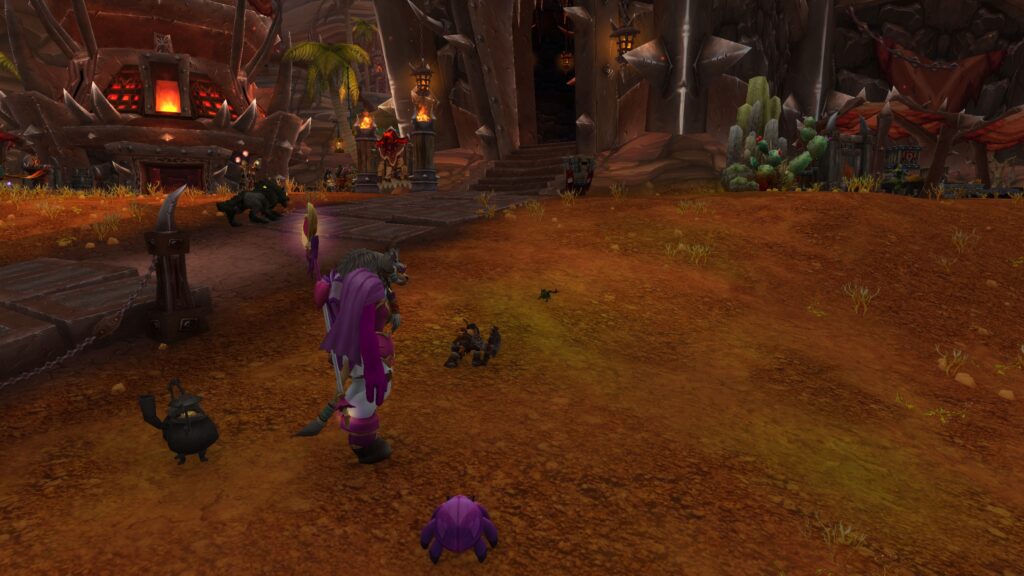
In World of Warcraft, understanding special ability interactions is vital for mastering raid encounters, as these mechanics often dictate the strategy and coordination required to succeed. Ability synergy and buff management play significant roles in several fights. For instance, Chimaeron’s Massacre ability works closely with Finkle’s Mixture buff, requiring meticulous timing and coordination to survive the encounter. Likewise, in the fight against Shadow-Lord Iskar, the Eye of Anzu must be passed between players, demanding precise buff management to control the chaos.
Here’s a brief overview of various special ability interactions:
| Encounter | Key Interaction | Strategy Required |
|---|---|---|
| Operator Thogar | Dodging trains | Positioning and movement |
| Alysrazor | Flying mechanics | Aerial combat skills |
| Hagara the Stormbinder | Lightning conductors and ice phases | Spatial awareness and agility |
Mastering these interactions guarantees that your raid can adapt to any situation, leading to more successful encounters.
Unique Boss Phases
Unique boss phases in World of Warcraft raids introduce layers of complexity that keep encounters dynamic and challenging. These phases often present players with hidden phases or random mechanics that demand quick thinking and adaptability. You may encounter a boss like Gul’dan or Kil’jaeden, where hidden phases are revealed through specific actions, adding an element of surprise and altering strategies considerably. In some cases, random mechanics are employed, where a boss might use RNG to determine tactics, making each encounter feel fresh and unpredictable.
- Randomization: Encounter mechanics change per raid lockout or attempt, requiring adaptability.
- Hidden Phases: Specific conditions trigger secret phases, greatly altering fight dynamics.
- Multi-Part Encounters: Bosses have complex, multi-phase fights with distinct strategies and mechanics.
- Difficulty Scaling: Mechanics adapt based on raid size and difficulty, introducing new abilities in harder modes.
These elements collectively enhance the replayability and challenge of raid encounters.
Dealing With Enrage Timers
Although enrage timers might seem challenging at first, understanding their purpose and mechanics can greatly enhance your raid performance in World of Warcraft. Enrage timers enforce DPS requirements, creating urgency and preventing excessively long fights, while serving as a “soft” gear check. Different types include hard enrage, where a boss instantly kills the raid, and soft enrage, where difficulty gradually increases. Strategies for beating enrage timers involve DPS optimization, requiring you to refine your rotations and cooldown usage to maximize damage output. Minimize downtime during fights by reducing unnecessary movement and ensuring effective use of consumables and temporary buffs. Coordinate raid-wide abilities that boost damage, and prioritize targets and mechanics to efficiently progress through each phase. With examples like Patchwerk’s hard enrage or Brutallus’s increasing damage, mastering these strategies is vital to overcoming these intense challenges in your raid encounters.
Strategies for Interrupt Rotations
Mastering interrupt rotations is essential to managing boss mechanics and ensuring your raid’s success in World of Warcraft. Interrupt coordination is critical for controlling boss abilities, preventing dangerous spells, and reducing damage taken. To organize effective rotations, assign specific players, establish a clear order, and adjust based on cooldowns and fight phases. Here are some strategies:
- Designate a raid leader to call out interrupts, ensuring everyone knows their role.
- Use voice communication for real-time coordination, making quick adjustments as needed.
- Prioritize interrupting the most dangerous abilities to minimize threat to the raid.
- Have backup interrupters ready, covering for missed opportunities.
Improving your performance involves practice on training dummies, analyzing logs for missed interrupts, and educating your raid on which boss abilities need attention. Using addons like WeakAuras or BigWigs can assist in tracking these rotations. Implement a system to track and reward successful interrupts for better engagement.
Frequently Asked Questions
How Do Raid Composition Choices Affect Boss Encounters?
Your raid composition choices directly impact boss encounters, influencing tank balance, healing distribution, damage output, and crowd control. Tanks need to manage swaps and cooldown rotations efficiently to handle damage spikes, while healers must balance throughput and utility to keep the team alive. DPS players should coordinate burst and AoE damage, tailoring their roles for peak crowd control. A well-rounded team guarantees you meet the encounter’s demands, enhancing your raid’s overall performance.
What Are the Best Tools for Coordinating Raid Strategy?
To coordinate raid strategy effectively, you should investigate if combining voice chat and a strategy planner enhances performance. Use Discord for real-time communication, guaranteeing everyone is on the same page during complex encounters. Leverage Raidplan.io for visualizing strategies, allowing for precise role assignments and positioning. These tools, when used together, streamline coordination, improve team synergy, and guarantee you’re prepared for any unexpected developments during the raid.
How Does Gear Progression Impact Raid Boss Difficulty?
Gear progression greatly impacts raid boss difficulty by influencing gear scaling and damage thresholds. As you acquire higher item level gear, your character’s stats, like health and damage, improve, making encounters more manageable. Properly scaled gear allows you to meet DPS and healing requirements more easily, reducing the challenge posed by enrage timers and boss abilities. However, even with ideal gear, player skill remains essential for overcoming complex mechanics and one-shot abilities.
What Communication Techniques Improve Raid Performance?
Communication techniques in raids are like a conductor guiding an orchestra; callout strategies and feedback loops are vital. Assign roles for precise callouts, ensuring everyone knows when to execute important actions. Keep chatter minimal, using push-to-talk to prevent distractions. Post-raid debriefs create feedback loops, allowing analysis of performance. Implement clear, concise callout strategies during encounters, using tools like Discord or raid markers to enhance coordination and improve overall raid efficiency.
How Should Players Handle Unexpected Boss Mechanics?
When facing unexpected boss mechanics, stay calm and swiftly adapt. Observe animations and effects closely, using surprise tactics to tackle new challenges. Communicate any unusual mechanics to your team, ensuring everyone’s aware. Quickly assign roles for mechanic adaptation, adjusting positioning to avoid hazards. Use defensive cooldowns as needed, prioritizing survival over damage output. After encounters, analyze logs and replays to improve strategy, discussing insights with your team for better preparedness.
Conclusion
Understanding raid boss mechanics in World of Warcraft is essential for conquering each encounter successfully. Have you ever wondered how mastering movement-based mechanics or managing adds efficiently can make or break a raid? By familiarizing yourself with environmental hazards, special ability interactions, and unique boss phases, you can anticipate challenges and strategize effectively. Remember, dealing with enrage timers and coordinating interrupt rotations are key to victory. Equip yourself with this knowledge, and you’ll enhance your team’s raid performance.
Leave a Reply