

Since its launch in 2004, World of Warcraft has undergone significant graphical transformations while maintaining its iconic art style. Blizzard has continuously improved the game’s visuals through updated textures, lighting effects, animations, and character models. Yet, despite these enhancements, WoW has never abandoned the cartoonish, high-fantasy aesthetic that made it so recognizable. In this article, we’ll explore the evolution of WoW’s graphics from Classic to the latest retail expansions, highlighting key changes that have shaped the game’s visual identity.

WoW Classic (2004): A Stylized, Low-Polygon World
When World of Warcraft first launched in 2004, it was praised for its vast open world and distinctive art direction. However, compared to other MMOs at the time, WoW’s graphics were relatively simple. Blizzard opted for a stylized, hand-painted look rather than aiming for photorealism, ensuring that the game would age gracefully.
Some of the defining visual characteristics of WoW Classic included:
- Low-polygon character models and environments
- Flat textures with minimal shading
- Simple lighting effects with little dynamic shadowing
- Hand-painted landscapes that relied on color contrast rather than fine detail
Despite these technical limitations, Classic WoW’s world felt alive due to its unique art style, large-scale environments, and immersive atmosphere.
Burning Crusade and Wrath of the Lich King: Refining the Art Style
With the release of The Burning Crusade (2007) and Wrath of the Lich King (2008), Blizzard made several graphical improvements without straying too far from the original aesthetic.
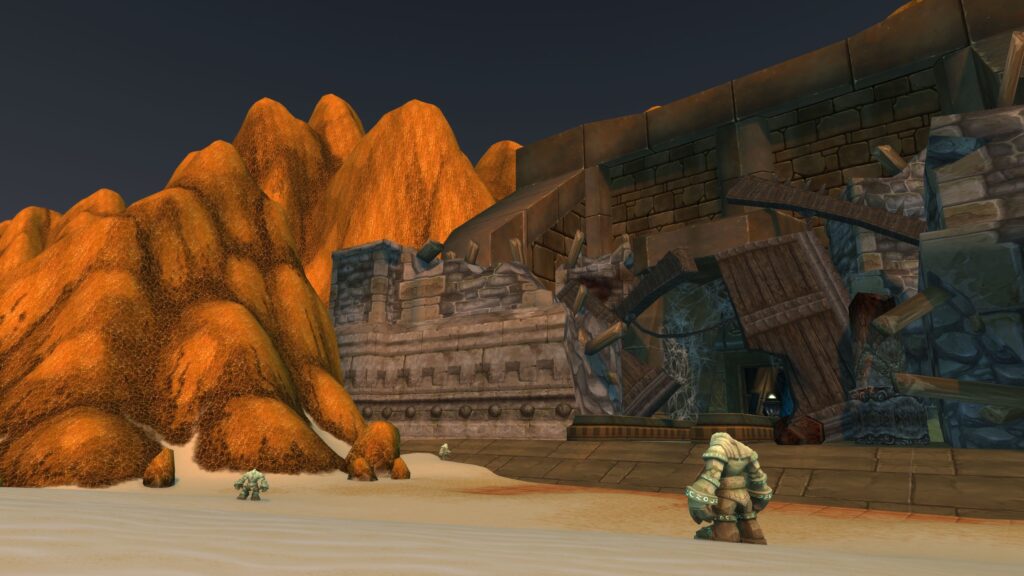
Notable enhancements included:
- More detailed character models, especially for new races like Blood Elves and Draenei
- Higher-resolution textures in Outland and Northrend zones
- More advanced lighting effects and atmospheric fog
- Improved spell animations and particle effects
While these changes were subtle, they made the world feel more vibrant and immersive. Areas like Zangarmarsh and Icecrown showcased Blizzard’s ability to create atmospheric zones using improved lighting and effects.
Cataclysm and Mists of Pandaria: The Start of Major Overhauls
With Cataclysm (2010), Blizzard introduced significant graphical updates, as the expansion reshaped much of Azeroth. The old world was redesigned, incorporating higher-resolution textures, improved water physics, and better lighting.
Mists of Pandaria (2012) continued this trend with:
- More detailed character animations
- New environmental effects like dynamic weather
- Higher-polygon models for NPCs and creatures
- Enhanced water reflections and terrain shading
Pandaria’s zones, such as The Jade Forest and Kun-Lai Summit, demonstrated the artistic leap Blizzard had made, introducing richer textures and more intricate designs.
Warlords of Draenor: The Complete Character Model Overhaul
One of the most significant graphical updates in WoW’s history came with Warlords of Draenor (2014), which introduced completely revamped character models for the original playable races.
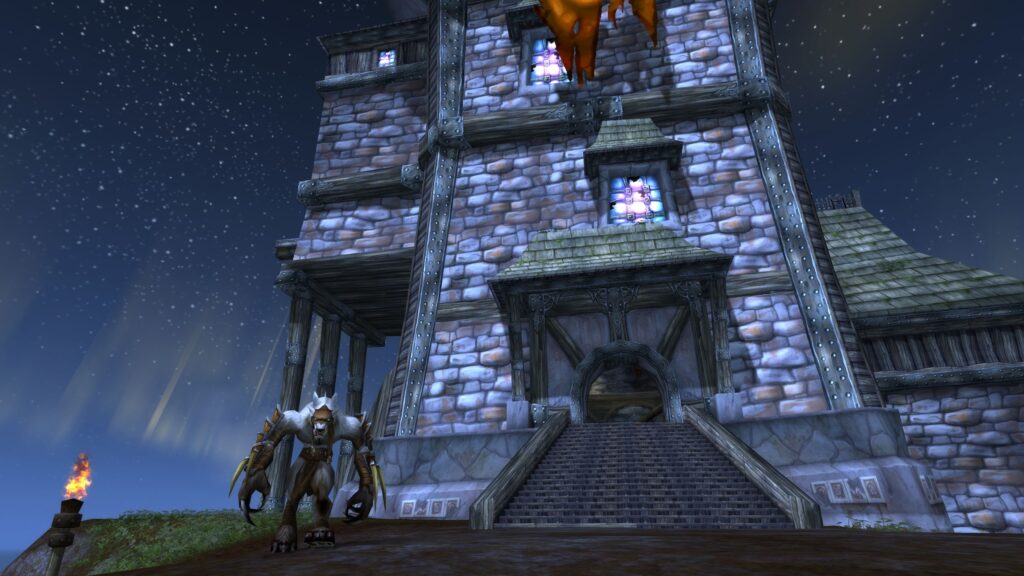
These new models featured:
- Higher polygon counts
- More expressive facial animations
- Improved skeletal rigging for smoother movement
- Detailed textures, including realistic skin and fur rendering
The world itself also received graphical improvements, with more complex environments, enhanced lighting, and increased draw distances, making zones feel more expansive and immersive.
Legion and Battle for Azeroth: Cinematic-Quality Environments
By the time Legion (2016) and Battle for Azeroth (2018) were released, WoW’s graphics had reached a new level of detail. Zones like Suramar and Zuldazar showcased stunning landscapes with elaborate architecture, detailed foliage, and vibrant lighting effects.
Key graphical improvements included:
- Volumetric fog and realistic cloud rendering
- Improved water physics with dynamic reflections
- More diverse and detailed NPC animations
- Advanced particle effects for spells and environmental events
Cutscenes also became more cinematic, using in-game character models and dynamic camera angles to tell stories in a more immersive way.
Shadowlands and Dragonflight: Pushing WoW’s Graphics Further
With Shadowlands (2020) and Dragonflight (2022), Blizzard took WoW’s visuals to the next level, implementing modern graphical features while maintaining the game’s signature art style.
These expansions introduced:
- Ray-traced shadows for enhanced lighting realism
- Higher-detail ground textures and terrain complexity
- Advanced skybox rendering with dynamic lighting
- Fluid, detailed character animations with motion capture influence
The floating realms of the Shadowlands and the lush, detailed environments of the Dragon Isles highlight the dramatic improvements in world design, making WoW feel more immersive than ever before.
The Future of WoW’s Graphics

As Blizzard continues to develop WoW, graphical improvements will likely focus on maintaining accessibility while pushing visual fidelity forward. Potential future enhancements could include:
- Full implementation of ray tracing beyond just shadows
- More dynamic weather and day-night cycles
- Enhanced character physics, such as real-time cloth movement
- Further improvements in character customization and facial animations
Despite these advancements, Blizzard remains committed to keeping WoW playable on a wide range of systems, ensuring that new graphics options will be scalable to accommodate different hardware.
Final Thoughts: The Enduring Art Style of WoW
While WoW’s graphics have evolved tremendously over the years, the game has never abandoned its stylized, high-fantasy aesthetic. This decision has helped WoW maintain a timeless look, preventing it from feeling outdated despite its age.
Each expansion has brought new levels of detail, from character models to environmental effects, making Azeroth more immersive than ever before. Yet, at its core, WoW still feels like the same game that captivated players in 2004.
As the game moves forward, we can expect Blizzard to continue refining its visuals while staying true to the art direction that has made WoW an enduring MMO for nearly two decades.
Home



Leave a Reply